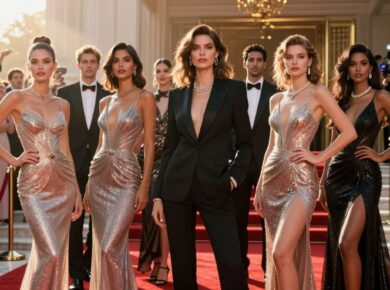

The Met Gala is far more than just a high-profile fundraiser for the Metropolitan Museum of Art’s Costume Institute; it is the undisputed Super Bowl of the fashion world. Each year, the event challenges Hollywood’s elite, top-tier designers, and global icons to push the boundaries of creativity, often resulting in red carpet moments that defy logic, gravity, and tradition. When the theme is announced, the industry holds its breath, waiting to see who will interpret the prompt with elegance and who will choose to embrace the truly bizarre.
Over the decades, the Met Gala has evolved from a sophisticated society dinner into a global spectacle where “outrageous” is the baseline expectation. From avant-garde headpieces that reach for the heavens to gowns that require their own zip codes, the red carpet serves as a canvas for the world’s most imaginative minds. Whether it is a tribute to punk rock or an exploration of camp, the stars who truly understand the assignment are the ones who leave us talking for years to come.
The Art of the Grand Entrance: 2015’s “China: Through the Looking Glass”
The 2015 exhibition, “China: Through the Looking Glass,” remains a benchmark for high-stakes fashion. It was a year where designers leaned heavily into drama, scale, and cultural storytelling. The results were nothing short of legendary, setting a new standard for how celebrities approach the red carpet.
Sarah Jessica Parker, a perennial Met Gala favorite, arrived in a Philip Treacy headpiece that featured a striking, flame-like mohawk design, paired with a custom H&M gown she helped conceptualize. It was a masterclass in thematic commitment. However, the night arguably belonged to Rihanna. Her bright yellow Guo Pei Couture gown, complete with a train that spanned over eight feet, became an instant internet sensation. It was a feat of engineering as much as fashion, requiring multiple assistants just to navigate the stairs. Meanwhile, Solange Knowles opted for a structural masterpiece by Giles, a piece so architectural that her head seemed to disappear into the folds of the fabric, proving that at the Met Gala, silhouette often triumphs over practicality.
Embracing the Absurd: The “Camp: Notes on Fashion” Era
If 2015 was about grandeur, 2019 was about the sheer joy of the ridiculous. The theme “Camp: Notes on Fashion” invited celebrities to lean into irony, humor, and theatricality. Camp is defined by its love of the unnatural, the artifice, and the exaggerated, and the attendees did not hold back.
Katy Perry became the literal light of the party when she arrived in a Jeremy Scott ensemble featuring a fully functional, 3-D chandelier that actually lit up. It was a daring, heavy, and undeniably memorable choice. Not to be outdone, Cardi B commanded the carpet in a Thom Browne mattress-inspired gown that looked like a quilted work of art, while Tiffany Haddish brought a playful, high-energy vibe to the event in a sparkling Michael Kors suit. These looks proved that the Met Gala is at its best when stars stop trying to look “pretty” and start trying to make a statement.
Why We Can’t Look Away: The Cultural Impact of Met Gala Excess
What makes these outfits so enduring? It isn’t just the price tag or the designer label; it is the audacity. In an era of curated social media feeds and safe red-carpet choices, the Met Gala remains one of the few places where celebrities are encouraged to be truly weird. This culture of excess serves several purposes:
- Artistic Collaboration: It forces a deep partnership between the celebrity and the designer, often resulting in one-of-a-kind pieces that will never be worn again.
- Cultural Conversation: These outfits spark global debates about the nature of fashion, gender, and identity.
- Historical Documentation: These looks are archived by the Costume Institute, ensuring that these moments of “fashion chaos” are preserved as part of our cultural history.
- Brand Visibility: For designers, a viral Met Gala moment is worth more than any traditional advertising campaign.
Ultimately, the Met Gala is a celebration of the impossible. It reminds us that fashion is not just about clothing; it is about storytelling, performance, and the occasional, delightful touch of madness.
Frequently Asked Questions
Who decides the theme for the Met Gala?
The theme is chosen by the curators of the Metropolitan Museum of Art’s Costume Institute, often in collaboration with Anna Wintour, who has overseen the event since 1995.
Are the celebrities required to follow the theme?
While there is no official “penalty” for ignoring the theme, the most celebrated guests are those who interpret the theme creatively. Those who ignore it often face criticism from fashion critics and fans alike.
What happens to the dresses after the gala?
Many of the custom pieces are returned to the designers, archived by the celebrities, or occasionally donated to museum collections if they are considered historically significant.
As we look back at these iconic moments, one thing is clear: the Met Gala will continue to be the stage where fashion’s wildest dreams come to life. Whether it’s a light-up chandelier or a massive yellow train, we will be watching, waiting to see what the next generation of icons will bring to the steps of the Met.


 InfluencerBlogger