
{
“title”: “Beyond the Gloss: Why ‘Anti-Influencers’ Are Capturing Our Attention”,
“content”: “
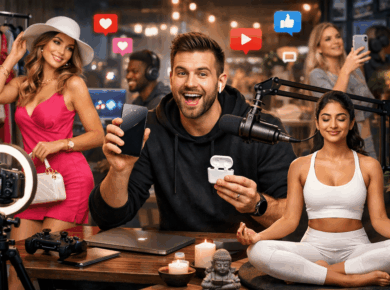
In the ever-evolving landscape of social media, where perfectly curated feeds and sponsored shout-outs have become the norm, a new wave of creators is making serious waves. We’re talking about the ‘anti-influencers’ – individuals who are deliberately ditching the polished perfection and embracing a more authentic, relatable approach. On platforms like TikTok, Instagram, and YouTube, it’s easy to get lost in a sea of sponsored content. Every few scrolls, you’re bombarded with influencers raving about the latest must-have product, often presented with flawless lighting, professional microphones, and an undeniably aspirational aesthetic. Phrases like \”I swear by this product\” have become so common that they’ve almost lost their genuine meaning, leaving viewers feeling skeptical and disconnected.
\n\n
But what happens when the gloss starts to feel a little too thick? When the constant barrage of \”perfect\” lives and \”must-have\” items leaves us feeling inadequate or simply bored? This is where the anti-influencer movement shines. These creators are tapping into a growing desire for authenticity, transparency, and genuine connection. They’re proving that you don’t need a Hollywood-level production to build a loyal following and make an impact. In fact, for many, it’s precisely their imperfections and unfiltered reality that draw people in.
\n\n
The Rise of Relatability: What Defines an Anti-Influencer?
\n\n
So, what exactly sets an anti-influencer apart from their more traditional counterparts? It’s not about rejecting social media altogether, but rather about redefining what it means to be influential. Instead of striving for unattainable perfection, anti-influencers often lean into their flaws, share their struggles, and offer a more grounded perspective. Think less \”buy this now\” and more \”here’s my honest experience.\” They might showcase a product that’s a bit worn, admit when something didn’t work out as planned, or simply share snippets of their everyday life without the heavy filter. This raw honesty resonates deeply with audiences who are tired of feeling like they’re being sold a fantasy. They’re looking for creators who feel like real people, with real problems and real triumphs.
\n\n
This shift is also fueled by a growing awareness of the commercial nature of influencer marketing. As more sponsored posts flood our feeds, audiences are becoming more discerning. They can spot a disingenuous endorsement from a mile away. Anti-influencers, by contrast, often prioritize genuine recommendations and transparent disclosures. If they’re promoting something, it’s usually because they genuinely use and love it, and they’re upfront about any affiliate links or partnerships. This builds trust, which is arguably the most valuable currency in the digital age. It’s about fostering a community built on shared experiences and mutual respect, rather than transactional relationships.
\n\n
Why Audiences Are Gravitating Towards Authenticity
\n\n
The appeal of the anti-influencer lies in their ability to foster a sense of genuine connection. In a world that often feels isolating, seeing someone on screen who is just as flawed and relatable as you are can be incredibly comforting. These creators aren’t afraid to be vulnerable, sharing their messy kitchens, their bad hair days, or their moments of self-doubt. This vulnerability breaks down the barriers that often exist between influencers and their followers, creating a more intimate and engaging experience. It feels less like watching a celebrity and more like chatting with a friend.
\n\n
Furthermore, the anti-influencer movement is a direct response to the overwhelming pressure to present a perfect life online. Many people feel immense pressure to conform to unrealistic beauty standards, achieve constant success, and maintain an impeccably organized existence. Anti-influencers offer an antidote to this pressure. By showcasing the reality behind the curated facade, they empower their audience to embrace their own imperfections and celebrate their authentic selves. This can be incredibly liberating and contribute to a healthier relationship with social media. It’s about finding joy in the everyday, not just in the extraordinary.
\n\n
The core of this appeal can be broken down into a few key elements:
\n\n
- \n
- Relatability: Audiences see themselves in the anti-influencer’s experiences, struggles, and everyday moments.
- Trust: Transparency about sponsorships and genuine product endorsements build credibility.
- Authenticity: The rejection of overly polished content and embrace of real-life imperfections fosters a deeper connection.
- Inclusivity: Anti-influencers often represent a wider range of body types, lifestyles, and backgrounds, making more people feel seen and valued.
- Mental Well-being: By offering an alternative to the pressure of perfection, they contribute to a more positive online environment.
\n
\n
\n
\n
\n
\n\n
The Impact on Brands and Marketing Strategies
\n\n
The rise of the anti-influencer isn’t just a trend; it’s a significant shift that brands need to acknowledge and adapt to. For a long time, the go-to strategy was to partner with influencers who had massive followings and a highly polished aesthetic. However, as audiences become more skeptical of overt advertising, brands are realizing the power of partnering with creators who have a more engaged and trusting community, even if their follower count is smaller. These \”micro-influencers\” or \”nano-influencers,\” who often embody the anti-

 InfluencerBlogger